
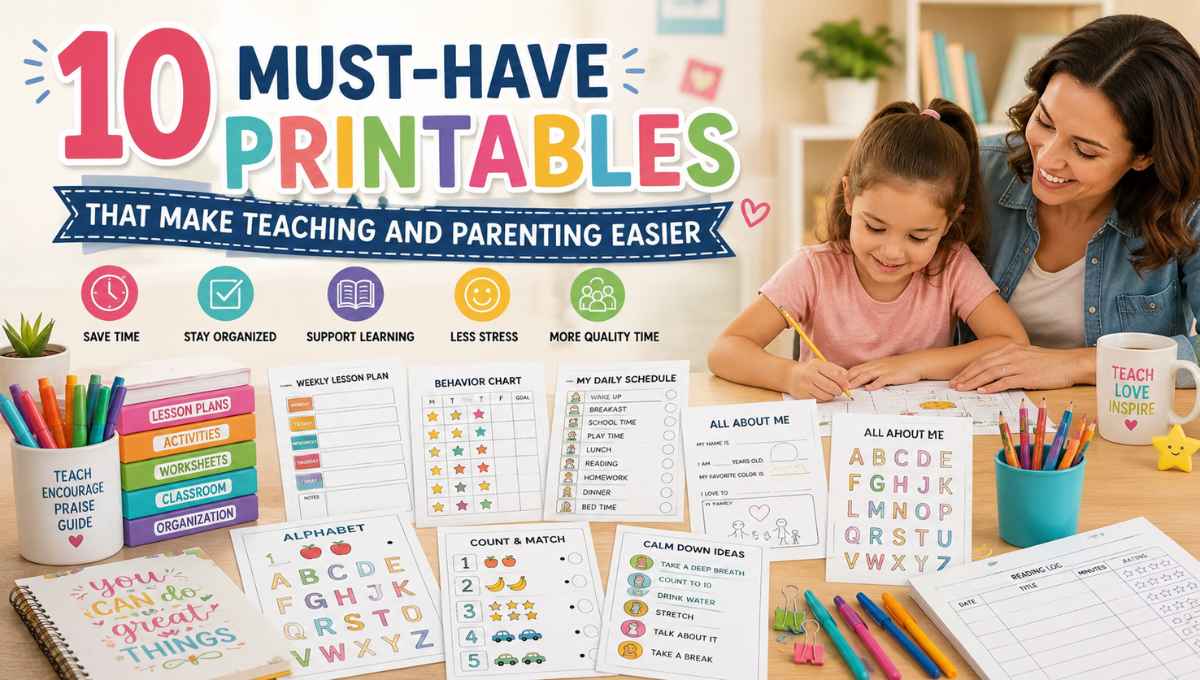
Life gets busy. Between lesson planning, homework, family schedules, appointments, household chores, and everyday responsibilities, it’s easy to feel like there just aren’t enough hours in the day. Staying organized can be challenging—but having the right printable resources on hand can make a big difference.
Whether you’re a parent trying to create a consistent daily routine, a teacher preparing engaging classroom materials, or a homeschool family looking for practical organization tools, printables help simplify everyday tasks while saving valuable time.
Instead of starting from scratch every week, you can rely on ready-to-use printable planners, charts, trackers, worksheets, and classroom resources that keep everyone organized and focused. They’re affordable, easy to use, and can be printed whenever you need them.
In this guide, we’ll explore 10 must-have printable resources that help parents and teachers stay organized, encourage positive habits, support children’s learning, and make everyday life a little less stressful.
Being organized isn’t about doing more—it’s about making everyday tasks easier so you can spend more time focusing on what matters most.
Whether you’re managing a busy classroom or balancing work and family life, these printable resources can help you stay one step ahead while creating a more enjoyable learning environment for children.
Why Printable Resources Are Worth Having
Printable resources are popular because they combine convenience with flexibility. Instead of purchasing expensive planners or constantly searching for new worksheets online, you can build a collection of reusable resources that work for your family’s or classroom’s unique needs.
Many parents and teachers keep a folder or binder filled with their favorite printables so they’re always ready for busy mornings, homework sessions, classroom activities, or unexpected schedule changes.
The best printable resources don’t just make life easier—they also help children build confidence, develop healthy habits, and become more independent over time. Let’s take a look at ten printable essentials that every parent and teacher should have.
1. Daily Routine Charts
One of the biggest challenges parents face is creating a consistent daily routine. Between getting ready for school, completing homework, eating healthy meals, and bedtime, it’s easy for children to become distracted or forget important tasks.
A printable daily routine chart provides clear visual reminders that help children understand what comes next. Instead of constantly repeating instructions, parents can encourage children to follow their own schedule while building independence and responsibility.
Daily routine charts are especially helpful for younger children who respond well to pictures, colors, and simple checklists.
Include routines such as:
Parent Tip: Laminate your routine chart or place it inside a clear sheet protector so children can check off completed tasks with a dry-erase marker every day.
2. Weekly Lesson Planners
Planning lessons doesn’t have to be stressful. A well-designed weekly lesson planner helps teachers, tutors, and homeschool families organize learning goals, classroom activities, assignments, and important reminders all in one place.
Instead of juggling multiple notebooks or sticky notes, everything stays organized on a single printable page that’s easy to update each week.
Lesson planners also make it easier to prepare materials ahead of time, ensuring that every school day runs more smoothly.
A weekly lesson planner can include:
Whether you’re teaching one child or an entire classroom, having a structured lesson plan helps you stay organized while giving students a more consistent learning experience.
Teaching Tip: Spend 20 minutes every Friday planning the following week. A little preparation saves hours during busy school days.
3. Homework Planners and Assignment Trackers
Missing assignments and forgotten homework can quickly become frustrating for both parents and teachers. A printable homework planner helps children stay organized by giving them one place to record assignments, due dates, and completed work.
Using a planner also teaches valuable time-management skills that benefit children throughout their education.
Many families find that homework becomes less stressful when children know exactly what needs to be completed each day.
Helpful planner sections include:
Older students can use assignment trackers independently, while younger children may enjoy reviewing their planner each evening with a parent. This simple habit encourages responsibility and reduces last-minute surprises.
Success Tip: Keep the homework planner in your child’s backpack or homework folder so it’s always available at school and at home.
4. Reading Logs and Book Trackers
Developing a love of reading is one of the greatest gifts parents and teachers can give a child. A printable reading log makes the experience even more rewarding by allowing children to track their progress, celebrate achievements, and build confidence with every book they finish.
Reading logs are more than simple checklists. They encourage children to reflect on what they’ve read, set personal reading goals, and develop lifelong reading habits.
Whether your child enjoys picture books, chapter books, or educational nonfiction, keeping a reading record helps make every completed book feel like an accomplishment.
A reading log can include:
Reading Tip: Celebrate every completed book with praise or a visit to your local library. Positive experiences help children build a lifelong love of reading.
5. Reward Charts for Positive Habits
Building good habits takes time, consistency, and encouragement. Printable reward charts give children a simple way to see their progress while making everyday responsibilities feel more rewarding.
Instead of focusing on mistakes, reward charts celebrate positive behavior and encourage children to keep trying. Visual progress is often more motivating than verbal reminders alone.
The key is to praise effort and consistency rather than perfection. Small accomplishments eventually become lifelong habits.
Reward chart ideas:
Choose rewards that encourage family time and positive experiences, such as a movie night, extra story time, a trip to the park, or choosing the next family activity.
Parent Tip: Let children decorate their own reward chart with stickers or drawings. Personalizing the chart often increases motivation.
6. Classroom Labels and Organization Printables
An organized classroom creates a better learning environment for both teachers and students. Printable labels help keep books, supplies, learning centers, and classroom materials neatly organized while making it easier for children to find and return items independently.
Even parents can use organization printables at home to create dedicated learning spaces where school supplies, books, and craft materials are always easy to locate.
Simple labels reduce clutter, save time, and encourage responsibility by helping children understand where everything belongs.
Useful printable labels include:
For younger learners, consider using labels that combine both words and pictures. This not only keeps materials organized but also helps children develop early reading skills as they recognize familiar words throughout the classroom.
Organization Tip: Use matching colors for labels throughout the classroom or study area. A consistent color system makes it easier for children to stay organized independently.
7. Weekly Family Planners
Busy families often juggle school schedules, sports practices, doctor’s appointments, work meetings, grocery shopping, and countless other responsibilities. A printable weekly family planner helps bring everything together in one easy-to-read place.
Instead of wondering who’s picking up the kids or what activities are planned for the week, every family member can quickly check the schedule and stay informed.
A weekly planner also reduces last-minute stress by helping families prepare ahead of time rather than reacting to unexpected surprises.
A family planner can include:
Displaying the planner in a central location, such as the kitchen or family command center, encourages everyone to stay involved and organized throughout the week.
Organization Tip: Set aside 15 minutes every Sunday evening to plan the upcoming week together as a family.
8. Flashcards for Everyday Learning
Flashcards remain one of the simplest and most effective educational tools available. They help children review information in short, engaging sessions that fit easily into busy daily routines.
Unlike lengthy worksheets, flashcards encourage quick review and repeated practice, helping children remember important concepts with confidence.
They’re also incredibly flexible. Whether you’re waiting for dinner, riding in the car, or taking a short study break, flashcards make learning possible almost anywhere.
Popular printable flashcard topics include:
Print flashcards on heavy cardstock or laminate them for long-lasting use. A sturdy set can become a favorite learning resource for years.
Learning Tip: Keep a small set of flashcards in your bag or car so children can practice during short breaks or while traveling.
9. Meal Planners and Grocery Lists
Although meal planning may not seem like an educational resource, it plays an important role in helping busy families stay organized. A printable meal planner reduces daily decision-making, saves time, and helps children understand healthy eating habits.
Planning meals ahead of time also makes grocery shopping easier by reducing unnecessary purchases and helping families stick to a budget.
Many parents even involve children in choosing meals for the week, turning meal planning into an opportunity to teach responsibility and nutrition.
Helpful meal planning sections:
Keeping meal plans and grocery lists together makes shopping trips faster and helps ensure you always have the ingredients needed for the week ahead.
Family Tip: Let children choose one healthy dinner each week. Involving them in meal planning often encourages them to try new foods.
10. Emergency Contact and Important Information Sheets
One of the most valuable printables you’ll hopefully never need is an emergency information sheet. Having important contact details in one convenient place provides peace of mind for parents, caregivers, babysitters, grandparents, and teachers.
During an emergency, searching for phone numbers or medical information wastes valuable time. A well-organized information sheet keeps everything readily available when it matters most.
Store printed copies in your family binder, emergency folder, or another easily accessible location.
An emergency information sheet may include:
Review and update the information regularly to ensure every phone number and emergency contact remains accurate throughout the year.
Safety Tip: Keep one copy at home and another in your child’s school or emergency folder so important information is always easy to access.
Building Your Own Printable Resource Library
Every family and classroom has unique needs, which is why building a personalized collection of printable resources is such a smart investment. Instead of searching online every time you need a planner, tracker, worksheet, or chart, you’ll already have a trusted collection ready to print whenever you need it.
Start with the resources you use most often, then gradually expand your library throughout the year. Over time, you’ll create a collection that saves time, reduces stress, and supports learning in ways that work best for your home or classroom.
The best printable isn’t the most colorful one—it’s the one that makes everyday life a little easier.
Final Thoughts
Teaching, parenting, and homeschooling all come with busy schedules and endless responsibilities. While no printable can eliminate every challenge, the right resources can make daily routines easier to manage, reduce stress, and help children become more organized and independent.
From daily routine charts and lesson planners to reading logs, homework trackers, and family calendars, printable resources provide simple solutions that save time and create consistency. Best of all, they’re flexible enough to fit your family’s or classroom’s unique needs.
You don’t need dozens of different tools to get started. Begin with one or two printables that solve your biggest challenge today, then gradually build a collection that works for your home or classroom. Small improvements often lead to meaningful long-term results.
Organization isn’t about having everything perfect. It’s about creating simple systems that give you more time to focus on helping children learn, grow, and succeed.
Whether you’re planning lessons, encouraging positive habits, tracking reading progress, or organizing family schedules, printable resources make everyday life a little simpler—and that’s something every parent and teacher can appreciate.
Frequently Asked Questions
Why should I use printable resources instead of digital apps?
Printable resources provide a hands-on experience that many children find easier to follow. They reduce screen time, are simple to customize, and can be displayed anywhere in your home or classroom for quick reference.
Can printable planners be reused?
Absolutely. Many families and teachers laminate frequently used planners or place them inside reusable sheet protectors. This allows them to write with dry-erase markers and use the same printable again and again.
Which printable should I start with?
Start with the resource that solves your biggest everyday challenge. Parents often begin with daily routine charts or homework planners, while teachers frequently choose lesson planners or classroom organization printables.
Are printable resources suitable for homeschooling?
Yes. Printable resources are especially popular with homeschool families because they make it easy to organize lessons, track progress, plan activities, and create personalized learning experiences.
Do printable resources work for children of all ages?
Yes. Younger children benefit from visual charts, colorful labels, and simple trackers, while older students can use planners, reading logs, assignment trackers, and study organizers to build independence and responsibility.
How can I keep printable resources organized?
A simple three-ring binder with labeled dividers works well for most families and teachers. Organizing printables by category—such as planners, reading resources, classroom materials, and seasonal activities—makes them easy to find whenever you need them.
Share This Article
If you found these ideas helpful, consider sharing this article with other parents, teachers, homeschool families, or friends who are looking for creative ways to make learning more fun.
Latest Articles
Unlock Free Resources
Join the AlaviExpress community and receive free printables, new product alerts, creative inspiration, and exclusive subscriber discounts.